

After the graphic design of the products we are preparing, the prepress preparation stages and the printing process are completed, we start the post-printing processes. The processes we do after printing are carried out, controlled and inspected meticulously, like all the processes we apply in the printing process. Before dispatching our products to our customers, we make sure that we prepare the best quality prints, and we safely ship the products we have completed to design and print to our customers.
Post-printing stages are an important part of the printing process. This process; It helps in determining the final look and shape of the product we have finished printing. Post-printing process consists of several sub-processes applied depending on the type of project we are running and the work we do.
Some of the basic post-printing processes that are frequently used in the printing industry are:
Cutting Stage:
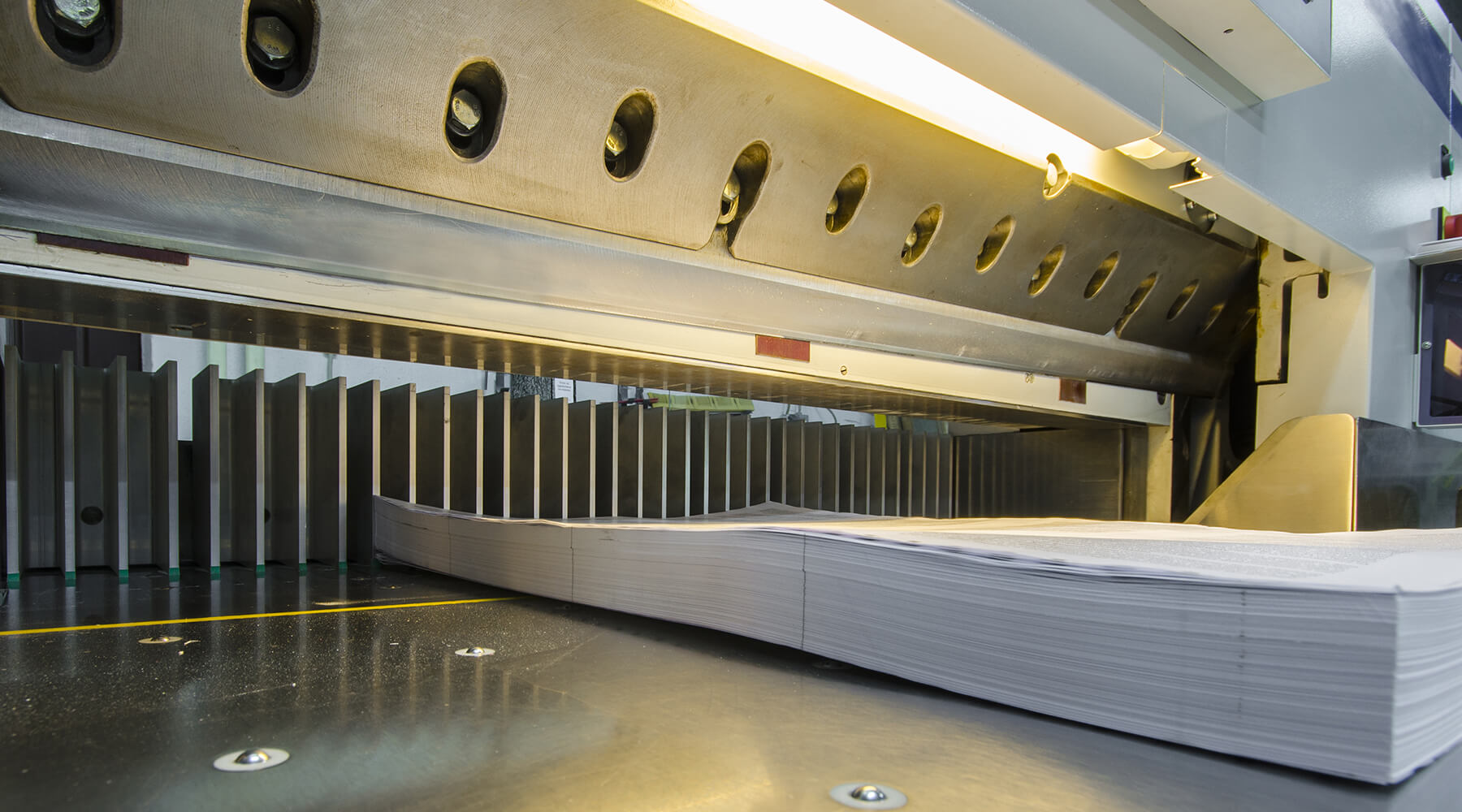
One of the most common postpress operations we use for almost all products is cutting. The machines we use for this purpose are known as guillotine cutter or paper cutter. These are specially designed machines for cutting web type large substrates, different sheets or sheets. These machines differ in size and features; because they are all developed for specific printing needs.
Lamination Stage:
Lamination process is a process applied to protect the product from water, tears, dirt and general damages that may occur. In addition to protecting the product from external factors, it includes steps such as giving the product the desired hardness or durability, creating a glossy or matte surface, adding the desired texture to the print, placing special effects such as gilding, hologram or mirror effect according to the design.
Folding Stage:
The folding process is mostly applied for brochures, magazines and product boxes.
Assembly Stage:
The assembly process consists of collecting and blending stages.
Collection:
It is a method of placing layers one after another. This method is applied for the assembly of books with varying page thickness.
Blend:
It involves the process of collecting individual sheets of paper instead of a stack of paper and combining stacks of paper together by adding them together.
Binding Stage:
Adhesive binding, side binding and saddle binding are generally applied to printed products.
Paper Pack Printing; It uses digital printing machines and special software programs to efficiently create materials according to customer requirements in post-printing processes and makes sure that the prepared product is error-free before the products are shipped. Prints are shipped to customers in the fastest and safest way after going through the necessary inspection and control process.